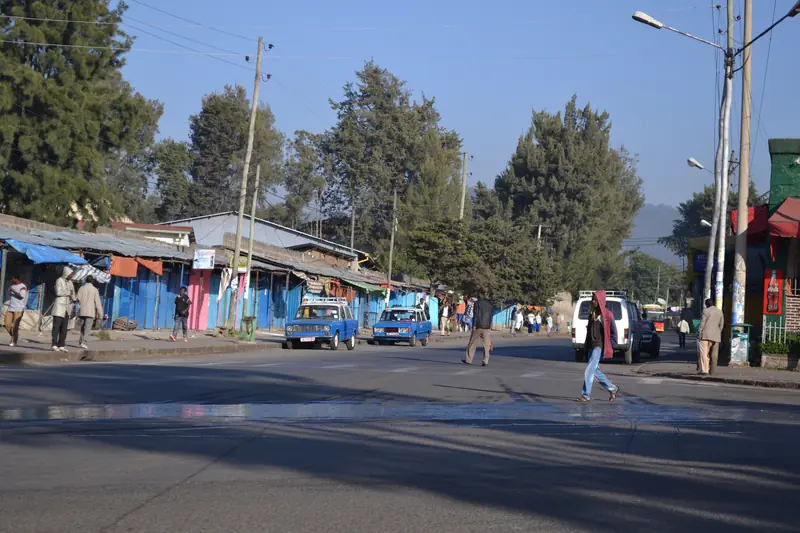
 Photo: Dvermeirre, Wikimedia Commons, CC BY-SA 4.0
Types of insurance in Ethiopia
What is compulsory, what is optional, and who sells it
6 chapters in one PDF, every source listed. Free, no sign-up.
Get the free PDFOn this page · 8 sections
The map at a glance
| Type | Compulsory? | Law or rule | Who provides it | Our guide |
|---|---|---|---|---|
| Vehicle third-party | Yes, every vehicle on a road | Proclamation 799/2013 | All 18 licensed insurers | Vehicle insurance |
| Comprehensive motor (own damage) | No | NBE minimum premium rates | All 18 licensed insurers | Third-party vs comprehensive |
| Social health insurance (SHI) | Yes, employees and pensioners | Proclamation 690/2010 | Ethiopian Health Insurance Service | Social health insurance |
| Community-based health insurance (CBHI) | No law we found makes it compulsory | Regional and city rules | Ethiopian Health Insurance Service, through woredas | Health insurance |
| Private medical insurance | No | Insurer's policy | Licensed insurers | Health insurance |
| Employment injury | Employer liable whatever the fault; insurance where the Ministry requires it | Labour Proclamation 1156/2019 | Licensed insurers (workmen's compensation) | Business insurance |
| Life, savings, credit life | No | Insurer's policy | 14 composite insurers | Life insurance |
| COMESA yellow card | Needed to drive into member countries | COMESA scheme; Proc. 799/2013, Art. 26 for vehicles entering | National bureau: Ethiopian Insurance Corporation | Travel insurance |
The compulsory covers
Third-party vehicle insurance
No vehicle may be driven on a road without it (Art. 3 of Proclamation 799/2013). Ethiopia's compulsory cover is wider than its neighbours': it pays for death, bodily injury, damage to property and emergency medical treatment caused to others (Art. 4(2)). The sticker must be on the windscreen, and driving uninsured is punishable by a fine of Birr 3,000–5,000 or one to two years' imprisonment (Art. 30). How to verify a cover: insurance check in Ethiopia.
Social health insurance
Proclamation 690/2010 makes employees and pensioners members of a national health scheme, with equal monthly contributions from employer and employee (Arts. 5 and 9). Roll-out started in January 2026 with public health-sector staff. Details: social health insurance in Ethiopia.
Employer liability for work injuries
Under the Labour Proclamation No. 1156/2019, an employer is liable for employment injuries irrespective of fault (Art. 96), up to five times annual wages for death or permanent total disablement of a worker outside the pension scheme (Arts. 109–110). The law lets the Ministry decide which undertakings must insure that liability (Art. 171(1)(i)); a workmen's compensation policy lets a business carry it. See employment injury insurance.
The COMESA yellow card
To drive into Kenya, Djibouti, Sudan and other member countries, a vehicle needs a COMESA yellow card, which covers third parties in the countries visited. A foreign vehicle entering Ethiopia needs a local certificate or a yellow card (Proclamation 799/2013, Art. 26).
General (non-life) insurance
General insurance protects property and liabilities, usually for a year at a time. It is by far the larger branch: ETB 38.0 billion of the ETB 41.1 billion of premiums written in 2024/25, and 49.6% of it is motor (NBE Financial Stability Report). All 18 licensed insurers write general business. The covers most people and businesses meet:
- Motor — compulsory third-party and optional comprehensive (own damage, fire, theft).
- Fire and allied perils — buildings, stock and contents.
- Engineering — machinery, construction sites and equipment.
- Marine and goods in transit — imports, exports and goods on the road.
- Liability — public liability, product liability, professional indemnity.
- Workmen's compensation / employer's liability — the Labour Proclamation benefits.
- Medical — individual, family and group health cover.
- Travel — medical and trip cover abroad, including visa insurance.
- Money, burglary and fidelity — cash, break-ins and staff dishonesty.
In general insurance, net claims incurred were ETB 10.5 billion, or 51.0% of net earned premium, in 2024/25, according to the NBE — a sector average, not a figure for any one insurer.
Long-term (life) insurance and takaful
Long-term insurance pays on death, at the end of a savings term, or when a borrower dies. It is small in Ethiopia: ETB 2.6 billion of life premium and ETB 0.5 billion of takaful in 2024/25, against ETB 38.0 billion for general insurance (NBE). 14 of the 18 insurers are composite companies writing both life and general business; 4 write general business only.
| Product | What it does |
|---|---|
| Term life | A lump sum if you die during the term |
| Endowment / savings | A sum at the end of the term, or earlier on death |
| Credit life | Repays a loan if the borrower dies |
| Group life | Cover for staff, arranged by the employer |
| Takaful | Sharia-compliant cover; a first full takaful insurer was being formed in 2025 |
More: life insurance in Ethiopia.
Health cover: three systems side by side
Health is the area where public and private insurance meet. CBHI covered 63 million people in 13.67 million households across 1,195 districts in 2024/25 (EHIS); SHI covers salaried employees and pensioners as it rolls out; and private medical insurance from the licensed insurers adds treatment in private hospitals and higher limits. The full picture: health insurance in Ethiopia.
Who sells insurance, and how to buy safely
Only companies licensed by the National Bank of Ethiopia may sell insurance: the 18 insurers on the NBE list, and their 3,077 agents and 54 brokers (2024/25). Before you pay:
- Check the insurer on the list of licensed insurers and ask any agent or broker for their NBE licence.
- Ask for the policy wording, not only the schedule: exclusions, excess, claim procedure.
- Get the premium in writing — for motor third-party it follows a national tariff.
- Keep the policy, the receipt and, for a vehicle, the certificate and sticker together.
- If a claim goes wrong, complain to the insurer in writing; it has 10 business days to answer before you complain to the NBE (FCP/01/2020).
To compare insurers on the regulator's figures, see the largest insurers in Ethiopia and compare two insurers. Tulinde does not rank or rate insurers.
Already insured?
Next step
Frequently asked questions
What are the types of insurance in Ethiopia?
General (non-life) insurance — motor, fire, engineering, marine, liability, medical, travel — and long-term insurance — life, savings, credit life and takaful. Public health cover comes from community-based health insurance and social health insurance, run by the Ethiopian Health Insurance Service.
Which insurance is compulsory in Ethiopia?
Third-party vehicle insurance for every vehicle on a road (Proclamation 799/2013) and social health insurance for employees and pensioners (Proclamation 690/2010). Employers are also liable for work injuries regardless of fault under the Labour Proclamation.
What is the most common type of insurance in Ethiopia?
Motor insurance: it was 49.6% of general insurance in 2024/25, and general insurance was 92.5% of all premiums, according to the National Bank of Ethiopia.
What is the difference between life and non-life insurance in Ethiopia?
Non-life (general) insurance covers property and liabilities, usually for a year. Life (long-term) insurance pays on death or at the end of a savings term. 14 of the 18 insurers sell both; 4 sell only general insurance.
Is there Islamic (takaful) insurance in Ethiopia?
Yes. Takaful premium was ETB 0.5 billion in 2024/25, and the NBE reported a first full sharia-compliant insurer under formation.
Sources
- Proclamation No. 799/2013 — English text (Federal Negarit Gazette No. 53)
- Social Health Insurance Proclamation No. 690/2010, Federal Negarit Gazeta No. 50, 19 August 2010 (WHO legislation database copy)
- Labour Proclamation No. 1156/2019 (Federal Negarit Gazette No. 89)
- COMESA Yellow Card — overview
- National Bank of Ethiopia — Financial Stability Report, March 2026
- Ethiopian Health Insurance Service — community-based health insurance results (5 July 2025)
- National Bank of Ethiopia — licensed insurers
- National Bank of Ethiopia — Financial Consumer Protection Directive FCP/01/2020